As data center traffic and telecom bandwidth demands continue to soar, network architects face an unprecedented challenge: selecting the right optical transceiver form factors and specifications to balance speed, reach, power efficiency, and cost. From 100G to 400G and beyond, the ecosystem has expanded rapidly, introducing OSFP, QSFP112, QDD (QSFP-DD), and multiple variants like OSFP112-400G-VSR4, QSFP56-DD-400G-DR4, and QSFP28 100G LR4/ER4/ZR4. This comprehensive guide provides an in-depth technical comparison and practical selection advice for enterprise and hyperscale networks.
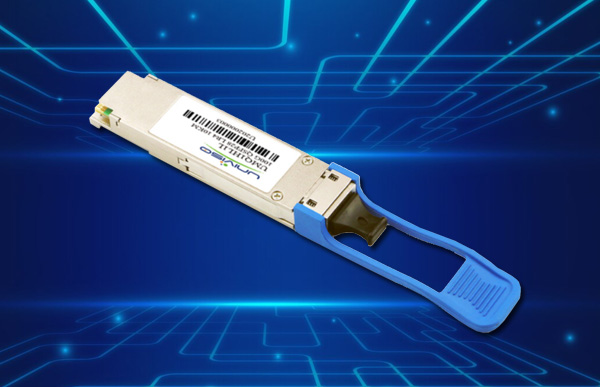
The transition to 400G Ethernet has driven the development of several multi-source agreement (MSA) form factors. The three dominant families are OSFP (Octal Small Form Factor Pluggable), QSFP-DD (Quad Small Form Factor Pluggable Double Density), and the emerging QSFP112. Each serves distinct density and thermal requirements in switch platforms.
OSFP was designed from the ground up for 400G and 800G applications. It features 8 electrical lanes running at 50G PAM4 per lane, delivering 400G total bandwidth. The newer OSFP112-400G-VSR4 variant adopts 112G per lane electrical interfaces (using 4 lanes for 400G, as 4×112G = 448G with FEC overhead), optimized for very short reach (VSR) applications inside data center clusters. VSR4 typically supports up to 100 meters on multimode fiber (MMF) using 4 parallel fibers with 850nm VCSELs, making it ideal for top-of-rack (ToR) to leaf connections. OSFP’s larger form factor allows superior thermal management—critical for high-power 400G optics—but consumes more front-panel real estate compared to QSFP-DD.
QSFP-DD (QDD) retains backward compatibility with legacy QSFP modules while doubling the electrical interface to 8 lanes. The QSFP56-DD-400G-DR4 standard uses 4 parallel single-mode fibers (SMF) with 1310nm optics, each lane carrying 100G PAM4 (4×100G = 400G). DR4 supports up to 500 meters reach (typically 500m for DR4, 2km for FR4). For even shorter distances inside the same rack or adjacent racks, QSFP56-DD-400G-VSR4 offers lower power consumption (around 8-10W compared to 10-12W for DR4) and lower cost by using less powerful DSPs or CDR-only designs. VSR4 variants are increasingly popular for spine-leaf architectures where reach does not exceed 100-200 meters.
QSFP112 is a 4-lane electrical interface module with each lane running at 112G PAM4, achieving 400G with only 4 lanes. Compared to 8-lane QSFP-DD, QSFP112 simplifies board design, reduces power (as low as 7W for VSR applications), and improves signal integrity. While QSFP112 modules are not backward compatible with legacy QSFP28 or QSFP56 cages, they represent the future for 400G and 800G (via 2×400G or 8×112G) in high-density switching. For 400G-VSR4 applications, QSFP112 offers the most compact solution with the lowest latency, making it attractive for AI/ML cluster backbones.
While 400G dominates new deployments, 100G remains the workhorse for access and aggregation layers. The QSFP28 form factor has matured into a reliable standard with multiple reach options.
QSFP28 100G LR4 uses 4 wavelengths (1295.56, 1300.05, 1304.58, 1309.14 nm) over duplex single-mode fiber to achieve 10km reach. It is the default choice for campus backbones and metro edge. QSFP28 100G ER4 extends reach to 40km by using APD receivers and higher transmit power (typically 0 to +4dBm). Both comply with IEEE 802.3ba and are fully interoperable with standard 100GBase-LR4 and ER4 equipment.
For longer distances, QSFP28 100G ZR4 covers up to 80km on duplex SMF with EDC (electronic dispersion compensation) and forward error correction (FEC). To achieve QSFP28 100G 100KM, manufacturers typically integrate semiconductor optical amplifiers (SOAs) or use coherent detection. These “ZR+’’ modules are not covered by the standard ZR4 MSA but are available from leading vendors for telecom long-haul applications. Operators should verify link budgets and dispersion tolerances when specifying 100km reaches.
BIDI (Bidirectional) technology uses two wavelengths (e.g., 1270nm/1330nm) over a single fiber, effectively halving fiber usage. QSFP28 100G BIDI 40KM and QSFP28 100G BIDI 80KM are cost-effective solutions for fiber-constrained environments, especially in urban access networks where dark fiber pairs are scarce. However, BIDI modules require precise wavelength matching and typically have tighter optical budgets than conventional LR/ER/ZR modules. For 80km BIDI, optical amplification may be required.
Selecting the right transceiver involves matching reach, power, cost, and fiber type. Below is a structured comparison table for common specifications:
| Standard | Form Factor | Reach | Fiber Type | Typical Power | Target Use Case |
|---|---|---|---|---|---|
| 400G-VSR4 | OSFP112 / QSFP112 | ≤100m | MMF (SR4) | 7-9W | Inside rack, ToR-LEAF |
| 400G-DR4 | QSFP56-DD | 500m | SMF (4 fibers) | 10-12W | Spine-leaf, 500m clusters |
| 100G LR4 | QSFP28 | 10km | Duplex SMF | 3.5-4W | Campus, metro aggregation |
| 100G ER4 | QSFP28 | 40km | Duplex SMF | 4-5W | Regional metro |
| 100G ZR4 | QSFP28 | 80km | Duplex SMF | 5-6W | Long-haul metro |
| 100G BIDI 40KM | QSFP28 | 40km | Single fiber | 4-5W | Fiber-saving metro |
For intra-data center connections under 100 meters, 400G VSR4 in OSFP112 or QSFP112 form factors provides the lowest power per bit and lowest latency. For distances up to 500 meters, QSFP56-DD-400G-DR4 is the industry standard. Beyond 500 meters but under 2km, FR4 (not covered in depth here) becomes relevant. For carrier-grade 100G, QSFP28 LR4/ER4/ZR4 remain unbeatable in ecosystem maturity and interoperability.
Most enterprises run hybrid networks where 100G uplinks aggregate 25G/10G leaf switches, and 400G cores connect to 100G distribution layers. Breakout cables are essential: a single 400G DR4 port can be fanned out to four 100G DR1 (or 100G FR1) interfaces using a passive copper or active optical breakout cable. Similarly, OSFP112-400G-VSR4 can break out to 4×100G VSR4. When mixing QSFP28 100G LR4 with 400G DR4, ensure the intermediate switch supports gearbox functions to translate between 50G PAM4 (DR4 lanes) and 100G NRZ (LR4).
400G modules, especially early-generation QSFP-DD, can exceed 12W per port, leading to switch fan speed increases and higher operating costs. QSFP112 and OSFP112 reduce per-lane electrical overhead, achieving 400G VSR4 at under 9W. For comparison, a QSFP28 100G LR4 typically runs at 3.5W, so four such 100G ports (400G aggregate) consume about 14W—higher than a native 400G VSR4 solution. Therefore, migration to 400G VSR4 can actually improve power efficiency per gigabit, despite higher absolute port power.
Both OSFP and QSFP-DD have defined 800G roadmaps. The OSFP form factor supports 8×112G = 800G (800G SR8, DR8), while QSFP-DD800 uses 8×112G as well. However, QSFP112-based 800G would require 8 lanes, which fits better in OSFP’s larger body. For most enterprises, 400G will remain sufficient until 2027-2028, but selecting switches that support both OSFP and QSFP-DD cages via adapter modules provides flexibility.
No. QSFP56-DD has a double-density electrical interface that is not backward compatible with QSFP28 or QSFP56 cages. You need a QSFP-DD cage or an adapter that breaks out to QSFP28, but this typically reduces speed to 100G.
VSR4 is specified for up to 100 meters on OM4 multimode fiber using 4 parallel 850nm VCSELs. Some implementations may reach 150 meters with FEC, but for reliable operation, adhere to 100m.
Not directly. BIDI modules use a single fiber with two wavelengths, while LR4 uses duplex fiber with four wavelengths. You need matched BIDI modules on both ends or a media converter.
VSR4 (especially in QSFP112 or OSFP112) is more cost-effective due to lower power and simpler optics (VCSEL vs DFB). DR4 requires more expensive 1310nm DFB lasers and better thermal management.
Standard ZR4 modules cannot reach 100km. Specialized coherent or SOA-boosted modules exist but require careful link power budget calculation. Always consult the module’s datasheet for maximum Tx power and Rx sensitivity.
QSFP112 uses 4 electrical lanes at 112G each, while QSFP-DD uses 8 lanes at 50G each. QSFP112 offers lower power and better signal integrity, but QSFP-DD offers backward compatibility with QSFP56 and QSFP28 modules.
Selecting the optimal transceiver—whether OSFP112-400G-VSR4 for low-power intra-rack links, QSFP56-DD-400G-DR4 for 500m spine-leaf fabrics, or QSFP28 100G ZR4/BIDI for metro and long-haul connectivity—requires balancing technical specifications with real-world deployment constraints. Each generation brings trade-offs in density, power, reach, and cost.
Our engineering team provides free link budget analysis and compatibility testing across major switch brands (Cisco, Arista, Juniper, Nokia). Whether you are upgrading from 100G to 400G or building a new greenfield data center, we can deliver pre-qualified modules with firmware tailored to your hardware.
Contact us today for a personalized 400G/100G transceiver roadmap and volume pricing. Optimize your network performance while reducing total cost of ownership.
Headquarter address :Room 1603, Coolpad Building B, North District of Science and Technology Park, Nanshan District, Shenzhen,China.518057
