In the current era of hyperscale data centers and distributed AI clusters, the demand for bandwidth has moved beyond incremental upgrades. As network architects phase out older 100G backbones, the focus has shifted toward high-density 400G and 800G solutions. Understanding the nuanced differences between form factors like QDD (QSFP-DD), QSFP112, and OSFP is no longer just a technical requirement—it is a financial and operational necessity. This technical audit analyzes the progression from the reliable QSFP28 100G LR4 to the cutting-edge OSFP112-400G-VSR4, providing a strategic roadmap for modern infrastructure expansion.
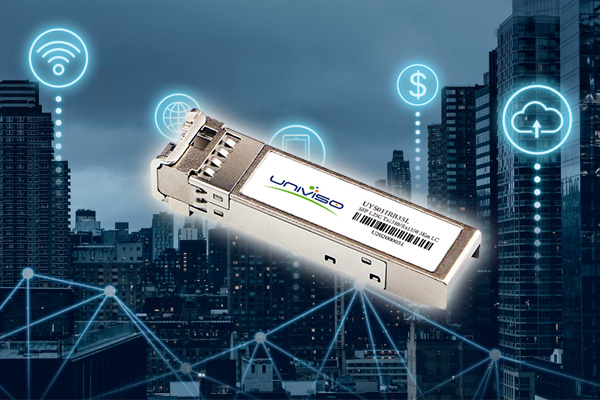
While 400G dominates the core, 100G remains the workhorse for many regional and edge interconnects. Sourcing high-performance 100G modules requires an understanding of distance-specific engineering and fiber efficiency.
For standard campus and metropolitan spans, the QSFP28 100G LR4 (10km) and QSFP28 100G ER4 (40km) provide a stable, non-coherent transmission path. These modules utilize 4-channel LAN-WDM technology to ensure signal integrity over single-mode fiber (SMF). In 2026, these are frequently used to aggregate traffic from edge nodes into 400G distribution hubs, maintaining high spectral efficiency.
For ultra-long-haul requirements without the complexity of DWDM systems, the QSFP28 100G ZR4 and the specialized QSFP28 100G 100KM transceivers offer carrier-grade performance. By employing SOAs (Semiconductor Optical Amplifiers) and high-sensitivity APD receivers, these modules allow service providers to bridge municipal gaps efficiently without external amplification.
In regions where fiber installation costs are prohibitive, Single-Fiber Bi-Directional (BIDI) technology is the preferred solution. The QSFP28 100G BIDI 40KM and QSFP28 100G BIDI 80KM modules utilize WDM to transmit and receive on a single strand, effectively doubling existing fiber capacity and reducing OpEx significantly.
The transition to 400G is primarily driven by the QSFP-DD (Double Density) form factor, which maintains backward compatibility while significantly increasing throughput via PAM4 modulation.
The QSFP56-DD-400G-DR4 (often referred to as QSFP DD DR4) is the standard for leaf-to-spine connectivity. Using parallel SMF with MPO-12 connectors, this architecture allows for 500m reaches with ultra-low latency. For even shorter distances within a rack, the QSFP56-DD-400G-VSR4 provides a power-optimized solution for 2026-gen high-radix switching fabrics.
Managing the thermal envelope of a QDD module (typically 10W-12W) is a top priority. As ports become denser, the signal-to-noise ratio (SNR) must be protected by high-quality EML lasers. This ensures that the 400G PAM4 signal remains within the host's FEC (Forward Error Correction) limits, minimizing packet retransmission in mission-critical AI training environments.
As we look toward 51.2T and 102.4T switching capacities, newer form factors like OSFP and QSFP112 are redefining power efficiency per bit.
The OSFP112-400G-VSR4 represents a shift toward 112G SerDes technology. By using four 112G lanes instead of eight 56G lanes, these modules reduce the complexity of the internal DSP, lowering power consumption and latency. The OSFP form factor also features integrated heat sinks, allowing for superior cooling in high-density AI clusters.
The QSFP112 serves as the logical evolution of the QSFP family, offering a streamlined path for 400G and 800G upgrades. For organizations auditing their next-gen hardware, the QSFP112 provides a high-efficiency alternative to the traditional 8-lane QSFP56-DD, specifically in environments where airflow and port density are at a premium.
Successful optical deployment requires a rigorous physical layer audit to ensure carrier-grade uptime:
Link Budget Management: Always verify that the total insertion loss is within the module's rated budget, especially for QSFP28 100G BIDI 80KM spans where signal margin is tight.
Receiver Protection: High-power optics like the 100G ER4 or 400G ZR4 require 10dB attenuators when tested on short lab patch cables to prevent permanent damage to the sensitive receivers.
Compatibility Coding: Ensure all QSFP-DD and OSFP modules are custom-coded for your specific switch vendor (Cisco, Arista, NVIDIA) to ensure full DOM (Digital Optical Monitoring) support and telemetry.
A: Only in breakout mode. A 400G DR4 port can be broken out into four 100G DR1 links, but it cannot directly interface with 100G LR4 due to differences in PAM4 vs. NRZ modulation.
A: OSFP offers superior thermal management due to its larger thermal interface and integrated heat sink, which is critical for the high-duty cycles of AI training clusters.
A: Typically no. These modules are engineered with internal SOAs to handle 100km point-to-point links, provided the fiber quality meets G.652.D standards.
From the established reliability of QSFP28 100G LR4 to the high-performance OSFP112-400G-VSR4, the optical interconnect landscape is evolving rapidly. Success in 2026 requires a partner that understands both legacy 100G architectures and the upcoming 112G SerDes revolution. Univiso provides lab-vetted, carrier-grade optical solutions designed to ensure your network is resilient, scalable, and cost-effective. Protect your investment with our precision-engineered transceivers.
Are you auditing your high-density 400G or 100G BIDI links? Contact Univiso’s technical team today for a comprehensive link budget analysis and a quote on our carrier-grade optical solutions.
Headquarter address :Room 1603, Coolpad Building B, North District of Science and Technology Park, Nanshan District, Shenzhen,China.518057
