In the transition toward high-density IP fabrics—driven by uncompressed 8K media flows and distributed AI inference—the physical layer often becomes the most rigid bottleneck. Conventional 100G-LR4 transceivers, requiring dual-fiber pairs, are increasingly ill-suited for port-starved metropolitan hubs. The 100G BIDI QSFP28 10km is the catalyst for a paradigm shift: moving from duplex to simplex 100G transmission without sacrificing distance or signal integrity.

At the heart of the QSFP28 100G BIDI 10km is the integration of WDM (Wavelength Division Multiplexing) filters within the transceiver’s optical assembly. Unlike standard LR4 optics that multiplex four 25G channels over four wavelengths, the BIDI 10km module typically utilizes a single 1271nm (TX) and 1331nm (RX) wavelength pair. This allows for full-duplex 100Gbps communication over a single strand of G.652.D single-mode fiber.
Form Factor: QSFP28 (Hot-pluggable)
Reach: 10km (G.652 SMF)
Modulation: PAM4 (1x100G)
Interface: Simplex LC
Power Budget: 6.3 dB min.
Consumption: < 3.5 Watts
Deploying 100G BIDI at the 10km edge requires a departure from legacy cabling habits. For architects at Univiso, we focus on three critical deployment pillars:
A BIDI link is inherently asymmetrical. The "U" (Upstream) module and "D" (Downstream) module must be logically mapped to the fiber path. Mispairing is the #1 cause of link initialization failure in 100G metro rings.
Since 100G BIDI relies on PAM4 modulation, the signal-to-noise ratio (SNR) is tighter than traditional 10G NRZ. Host switches must have KP4 Forward Error Correction (FEC) enabled to bridge the 10km span with a zero-loss error rate.
Over a 10km span, "dirty" fiber patches can cause Optical Return Loss (ORL) that disrupts the laser stability. High-density IP fabrics demand a clean, tested fiber plant to prevent the PAM4 eyes from closing under high temperature.
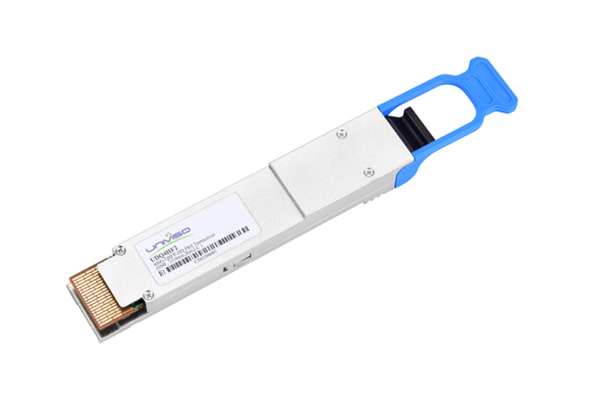
A prominent broadcast client recently utilized the 100G BIDI 10km to interconnect their central gallery with a remote OB (Outside Broadcast) van located 7.5km away. By utilizing the existing single tactical fiber already in the ground, they were able to aggregate 24 streams of SMPTE ST 2110-20 video, which would have traditionally required a massive dual-fiber pull. The result? A 50% reduction in fiber cabling costs and a 100% success rate in link stability over a 48-hour live event.
Headquarter address :Room 1603, Coolpad Building B, North District of Science and Technology Park, Nanshan District, Shenzhen,China.518057
